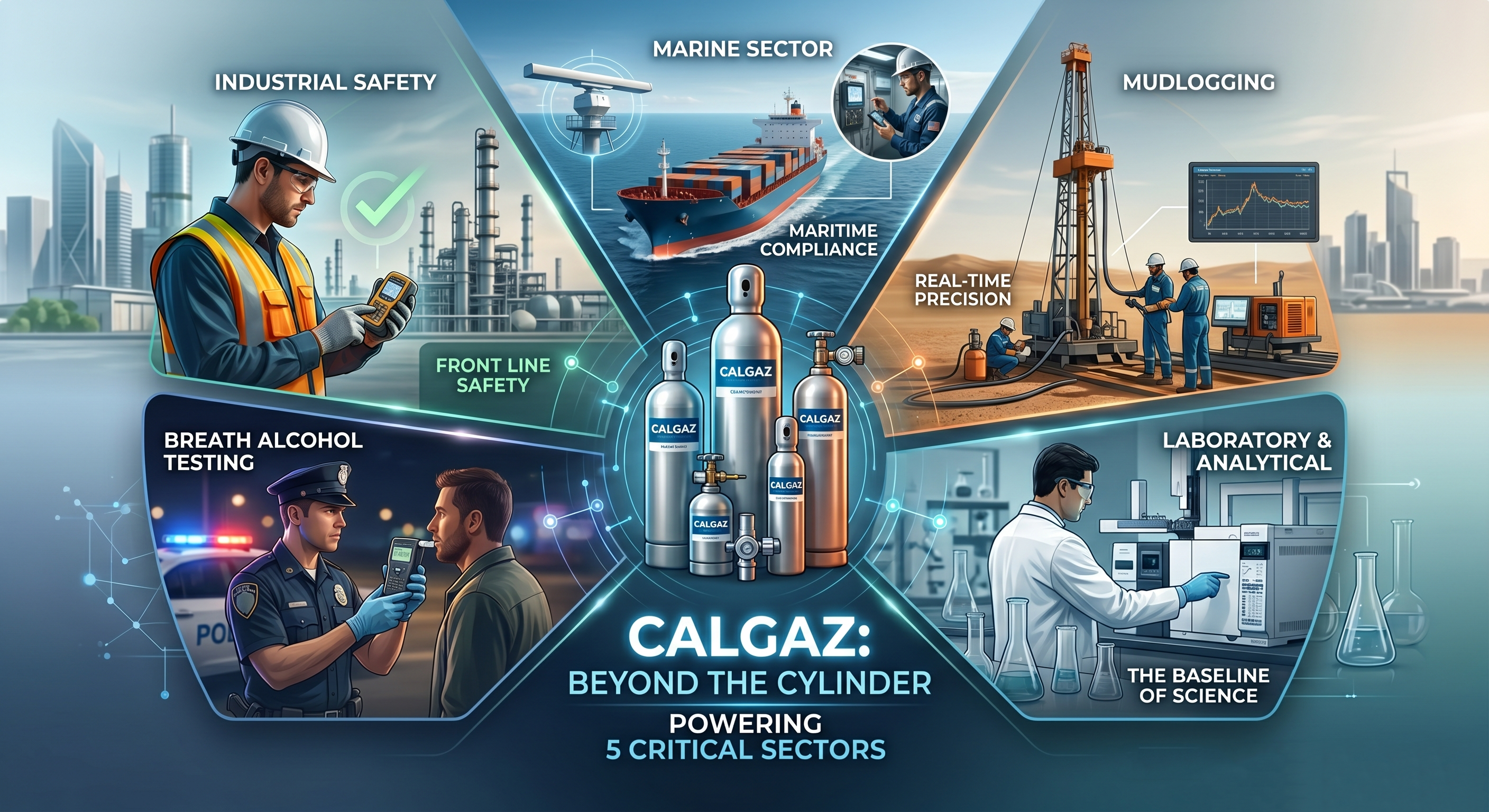

In industrial environments, safety isn’t just a metric—it’s a daily commitment. If your team relies on portable or fixed gas detection systems to monitor for toxic gases, combustibles, or oxygen depletion, those devices are their primary line of defense.
But a gas detector is only as reliable as its last calibration. Over time, sensors can drift due to environmental conditions, sensor poisoning, or physical shock. To keep your workforce safe, you need a robust testing regimen. This brings up a question we hear constantly at Calgaz: What is the difference between a bump test and a full calibration, and how often should you do each?
Let’s break down these two essential safety practices so you can ensure your fleet is always ready to protect.
What is a Bump Test? (The Daily Check)
Think of a bump test as a quick “heartbeat check” for your gas detector.
During a bump test, you briefly expose the instrument’s sensors to a known concentration of test gas (using a reliable Calgaz calibration gas mixture). The goal isn’t to check the exact accuracy of the reading, but rather to verify two critical functions:
- Sensor Response: Do the sensors actually react when they encounter the target gas?
- Alarm Activation: Do the audible, visual, or vibrating alarms trigger at the correct safety thresholds?
The Golden Rule: A bump test should be performed before each day’s use. It takes less than a minute, uses a minimal amount of gas, and provides immediate peace of mind that the device will alert a worker in a hazardous environment. If a device fails a bump test, it must immediately be taken out of service for a full calibration.
What is a Full Calibration? (The Precision Tune-Up)
While a bump test checks if the instrument works, a full calibration checks if the instrument is accurate.
Over weeks or months, gas sensors experience “drift”—a natural phenomenon where the sensor’s baseline readings shift slightly. During a full calibration, the instrument is connected to a certified reference gas. The detector’s software is then adjusted so that its readings exactly match the known concentration of the calibration gas.
Calibration typically involves a two-step process:
Span Calibration: Exposing the sensors to a precise mixture of target gases (such as Hydrogen Sulfide, Carbon Monoxide, or Methane) to adjust the instrument’s response curve.
Zero Calibration: Setting the baseline in a clean air environment (or using zero air gas) where target hazardous gases are entirely absent.
| Feature | Bump Test | Full Calibration |
| Primary Purpose | Verifies sensor functionality and alarms | Adjusts instrument accuracy and corrects sensor drift |
| Frequency | Daily (before every shift/use) | Monthly, quarterly, or bi-annually (per manufacturer/regulatory guidelines) |
| Time Required | 30 to 60 seconds | A few minutes per device |
| Gas Consumption | Low | Moderate (requires steady flow for sensor stabilization) |
| Action if Failed | Must immediately undergo a full calibration | Sensor may need replacement or factory service |